
Student housing
Explore housing for your time in Florida. Ask which accommodations are available for your cohort, what the rate includes, and how move-in lines up with the first day of class.
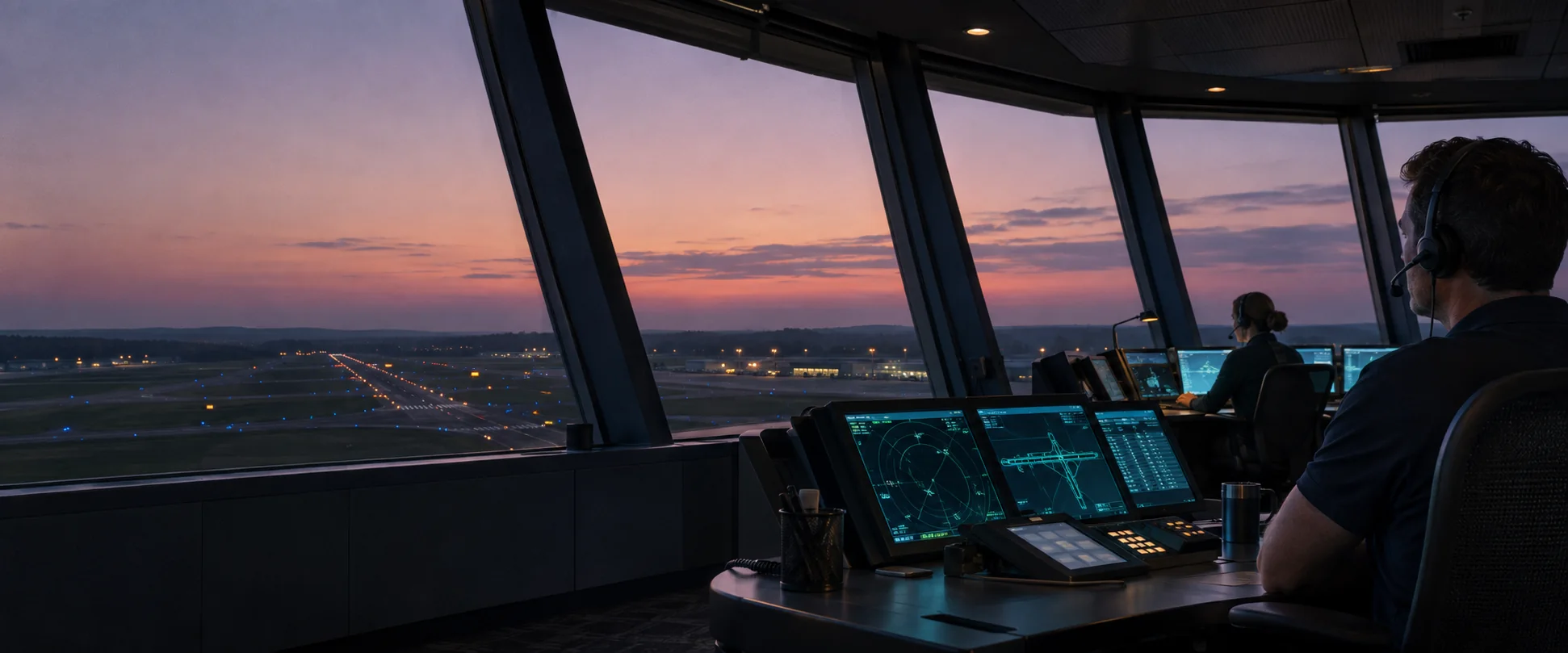
Train for the tower in Palatka, Florida. Build the judgment, focus, and radio skills of an air traffic controller in an accelerated three-month program.
Every aircraft you see is part of a bigger picture. Learn to read that picture, communicate with pilots, and make decisions as traffic changes.
Inside the curriculum
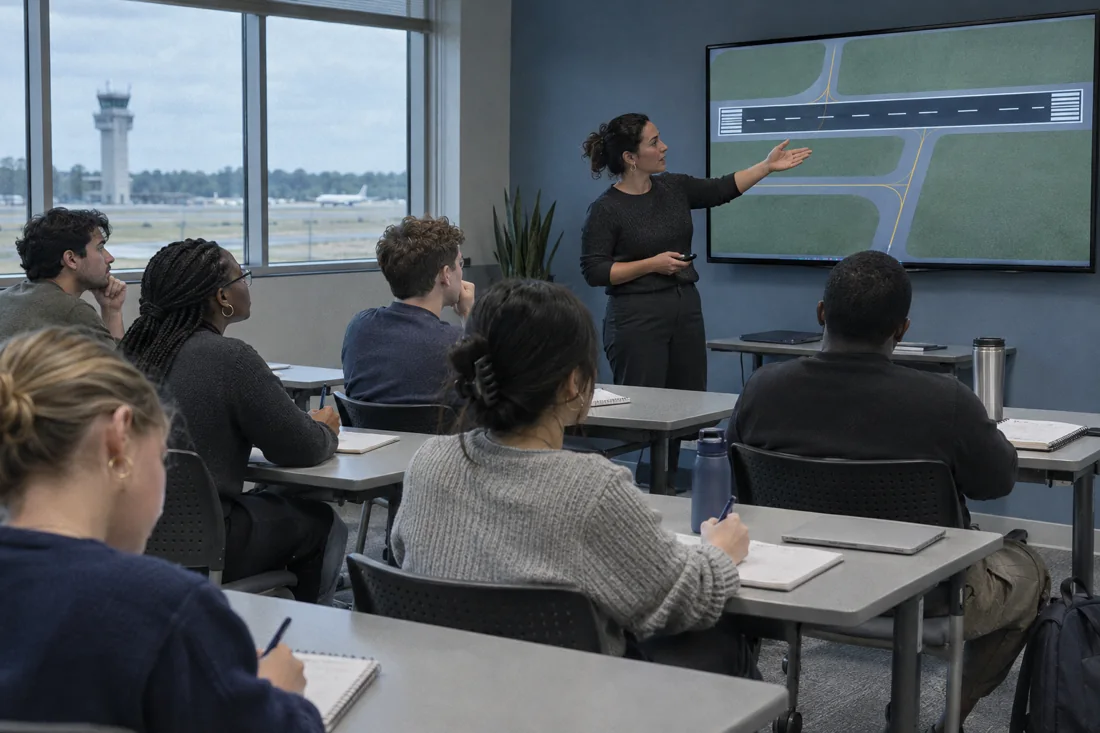
Start with the language of aviation. Study airspace, airport layouts, weather, and radio phraseology so you can follow an aircraft’s progress from its first call to its departure.
Bring those concepts to an airport setting. Study how controllers coordinate ground movements, arrivals, and departures while maintaining a shared picture of traffic.
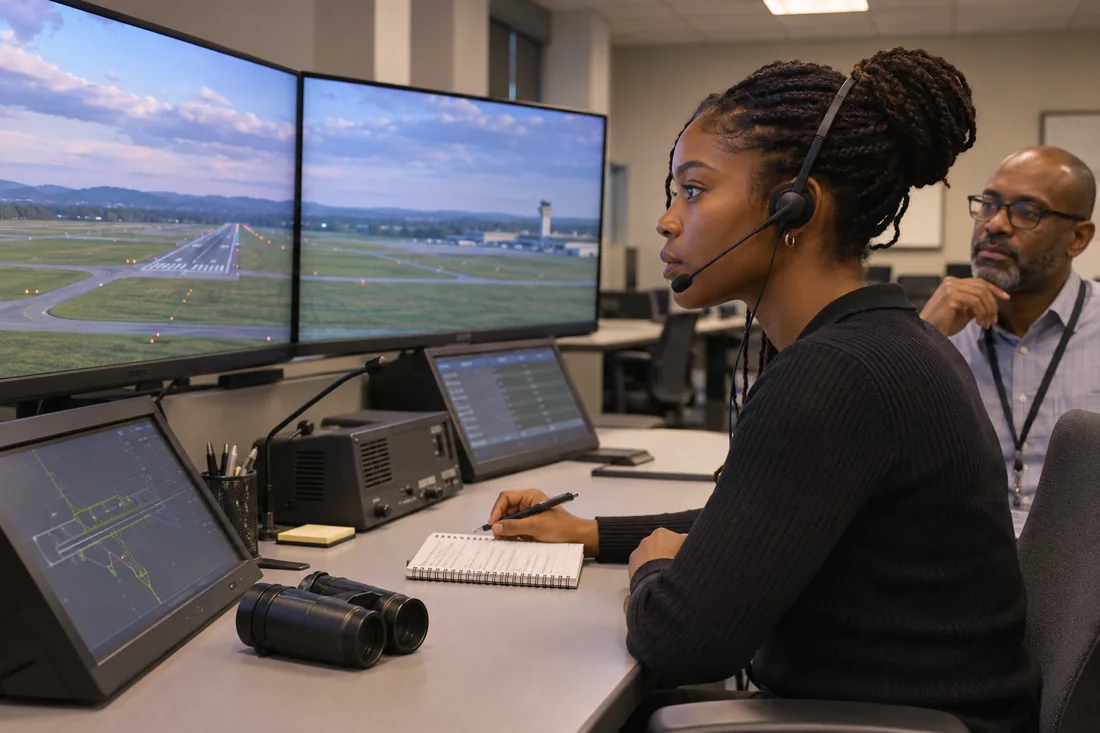
Take a position at the console and work through simulated traffic. Practice listening, prioritizing, and delivering clear instructions, then review your decisions with an instructor.
Contract towers serve airports across the country. For a new controller, the next stage is learning the traffic, procedures, and responsibilities of a specific facility.
ATCFO helps qualified graduates explore openings with contract tower operators. Hiring depends on the employer, available positions, and required clearances.
When hired, developmental controllers train at their assigned tower toward a facility rating. Ask admissions to identify the credential and training provider for your cohort.
Moving for a short, intensive program takes planning. Admissions can help you put a housing plan and a training budget together before you commit.
Explore housing for your time in Florida. Ask which accommodations are available for your cohort, what the rate includes, and how move-in lines up with the first day of class.
Talk with admissions about tuition financing, eligibility, and payment timing. Request written terms so you can compare the full cost alongside rent, travel, and everyday expenses.
Work directly with aviation instructors in class and in the simulator. The academy’s leadership draws on civilian, military, and federal contract tower experience.
Meet the academy teamThe academy looks for applicants who can meet these entry and screening requirements.
The academy lists both tuition payments as nonrefundable. The formal application carries a separate $53 fee, including processing. Confirm current terms before paying.
Review the academy payment scheduleATCFO forms cohorts around student demand and instructor availability. Share the month you can start and ask admissions for the next confirmed dates before arranging travel.
Contract tower employers and direct FAA hiring programs can have different entry requirements. Tell admissions your age and experience so you can discuss which pathways fit your background.
Eligibility depends on your benefits and the approval status of the specific course. Ask admissions for the provider and program details you need to verify coverage with the VA.
No. The academy provides placement support and introductions to potential employers. Each employer makes its own hiring decisions, and new hires must meet facility training requirements.
If you have worked en route, in approach control, or in the military, describe your prior roles and ratings to admissions. The team can help you determine whether tower training fits your next step.
Ask for the course outline, upcoming class dates, housing options, tuition financing, and career placement details in one place.
Use the academy’s contact form and mention the onboarding information package. Include your preferred start month so the team can advise you on available classes.
Request my information packageNo application payment is required to inquire.