
Housing
Find a place to live during training. Review available accommodations, move-in timing, and transportation with an intake officer.
Explore housing
ATCFO Academy trains prospective air traffic controllers in Palatka, Florida. Our accelerated three-month program combines classroom instruction, tower procedures, and hands-on simulator training.
Learn to follow an aircraft across the airfield, recognize the next decision, and communicate it clearly. The program builds those skills in three connected stages.
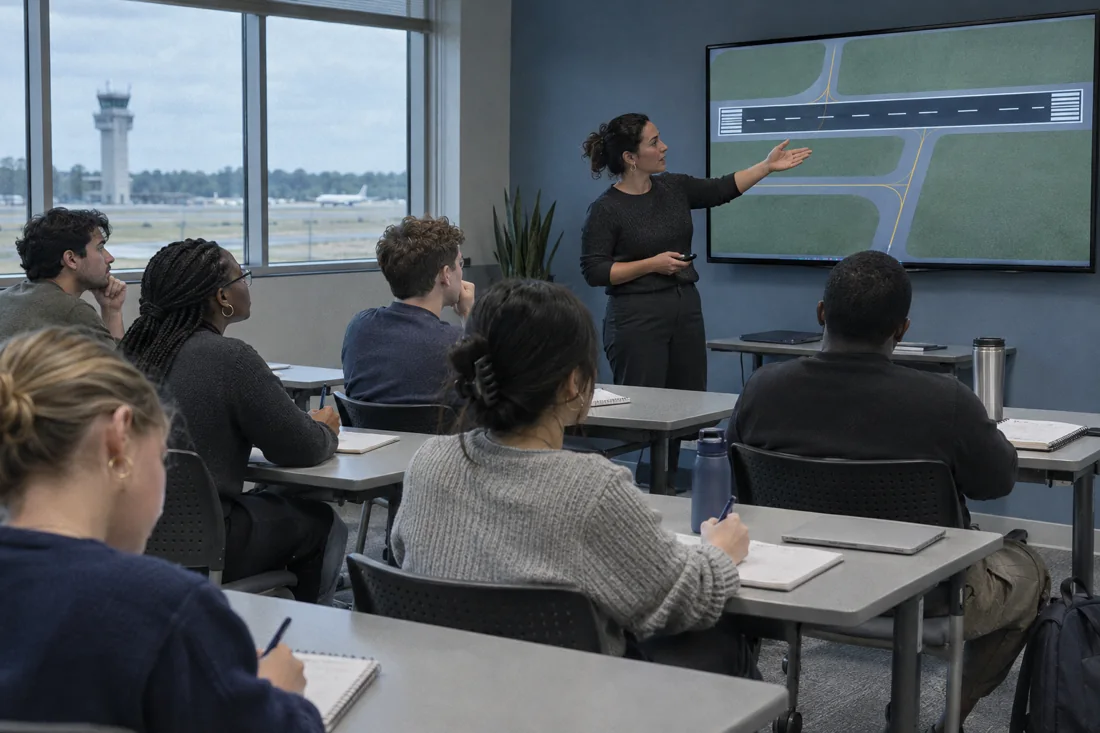
Start with a map of the airport. Identify the runways, taxiways, and surrounding airspace, then learn how weather and visibility affect what a controller needs to know. Following a radio exchange becomes easier when you understand where each aircraft is and where it needs to go.
Move from individual terms to the sequence of a flight. Trace an aircraft from the ramp to departure, then follow an arrival back to parking. Studying each transition shows why ground and local controllers coordinate closely and why a clear handoff matters.
Work through traffic scenarios at a console. Listen for a call sign, identify the aircraft, and practice responding while maintaining a picture of the other traffic. Discuss the scenario with an instructor to identify the decision that deserves more practice.
A pilot calls while another aircraft is already moving. In the simulator, you can pause afterward and reconstruct the moment. What did you hear? Where was your attention? What changed on the airfield?
Working through those questions turns a scenario into a skill you can practice again, with an instructor there to guide you.
Explore tower training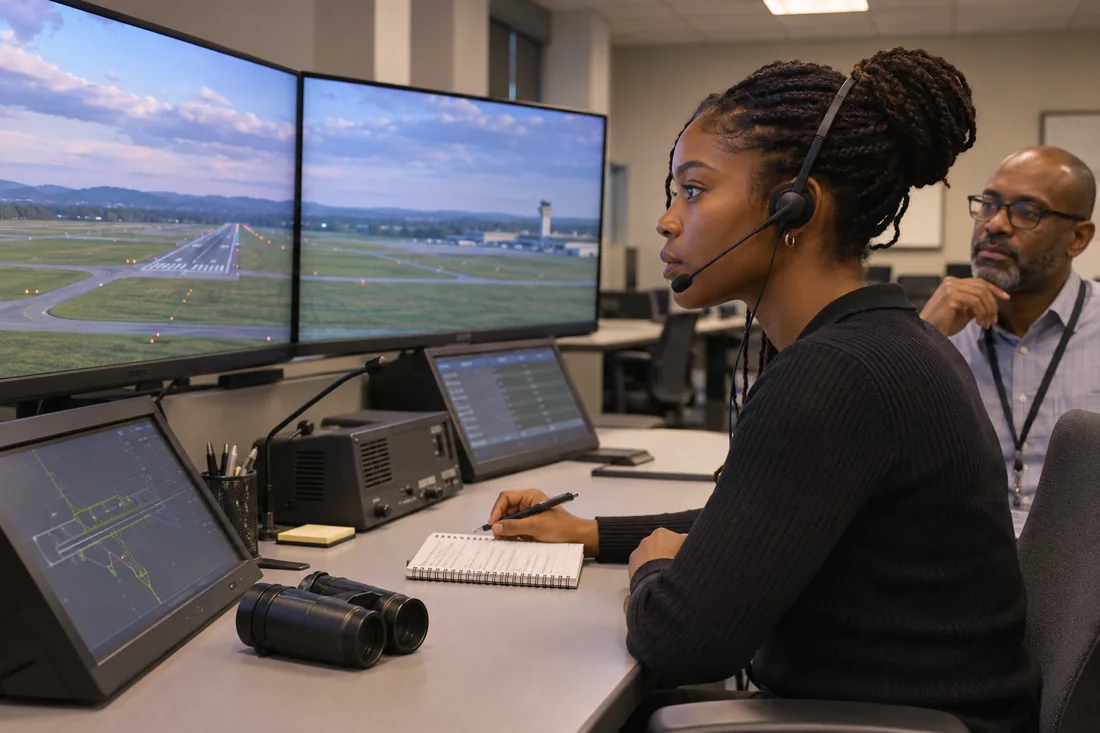
ATCFO offers student housing, tuition financial services, and job placement services. Explore each with your intake officer as you plan your training.
Find a place to live during training. Review available accommodations, move-in timing, and transportation with an intake officer.
Explore housing
Explore tuition financing and plan for living expenses during the program. Admissions can walk you through options and application timing.
Explore financial services
Connect with career opportunities after training. Learn how contract tower employers select candidates and what happens once you join a facility.
Explore job placementYou can start exploring the academy before deciding on a cohort. The intake process puts the program details and a real conversation within reach.
Share your contact details, aviation background, timing, and the services you want to discuss.
Review the training sequence, eligibility considerations, housing, financing, and career planning in one student guide.
Select an available call time or share your preferences. Use the conversation to confirm a realistic start date and the steps to enroll.
Every airport has its own traffic patterns, runway configuration, and daily rhythm. Contract tower employers hire for specific facilities, and controllers continue to train on site.
Our placement services help qualified graduates explore openings and prepare to speak with employers about experience, location, and readiness for facility training.
Explore job placement servicesWhether you are exploring aviation for the first time or bringing experience from another role, a few details will help your officer give you a more specific answer.
Think about the earliest date you could step away from your current role. Note any work, travel, or family commitments during the training period. Ask which cohort fits that window and when the academy can confirm attendance dates.
Bring an arrival window and a transportation plan. Ask how housing dates align with class, what to bring, and how you will get from your accommodation to training each day.
Write down the settings where you have worked and the responsibilities you held. A pilot, military controller, and en route controller may all have different questions about the tower pathway. Your officer can explain which parts of the program address your goal.
The accelerated program runs approximately 90 days in Palatka, Florida. It combines instructor-led classroom study with tower simulator exercises. Cohort dates depend on student demand and instructor availability.
Yes. ATCFO offers student housing. Indicate your interest during intake so your officer can review available accommodations, move-in timing, transportation, and housing terms for your cohort.
Yes. Financial services are available to prospective students. Use your call to review available tuition financing options, application timing, and provider requirements. Ask for the terms in writing.
ATCFO provides job placement services and connections to potential employers. A job offer depends on openings, employer selection, and the required clearances. Facility-specific training follows hiring.
Receive the onboarding package and arrange a call to discuss the program, student services, and your next steps.